Delhi Airport with Kids: How to Survive IGI Airport with a Baby or Toddler
Let’s be honest: just hearing the phrase “Indira Gandhi International Airport” (IGI) might make your heart beat a little faster. It is one of the busiest, largest, and most bustling transit hubs in the entire world. With the sheer volume of passengers, vast walking distances, and the sensory overload typical of traveling in India, it’s no wonder that even the most seasoned travelers can feel overwhelmed.
But here’s the good news: Delhi Airport is surprisingly well-equipped for families if you know where to look. We’ve navigated these terminals with overtired babies, jet-lagged toddlers, and more carry-on bags than any sane person should attempt to juggle. Whether you’re touching down for the first time on an international flight or navigating a quick domestic transfer to Goa or Kerala, the key to survival is preparation. You need to know the layout, understand the hidden family perks, and have a solid game plan.
From finding the cleanest nursing rooms to knowing which security line will save you an hour of waiting, we’ve got you covered. Here’s our parent-to-parent survival guide to making your transit through Delhi Airport as smooth as possible.
Arriving at IGI with Young Children
When your plane finally touches down, the first thing you’ll notice is the scale of the airport. Terminal 3 (T3), which handles all international flights and many domestic ones, is absolutely massive. The walk from your arrival gate to immigration can easily take 15 to 20 minutes at a brisk adult pace. With little legs in tow, that walk feels like a marathon.
Always bring a baby carrier or use a travel stroller for this stretch.
The Stroller Situation
If you gate-checked your stroller at your departure airport, don’t assume it will be waiting for you right at the aircraft door in Delhi. Often, ground staff send gate-checked strollers straight to the oversized baggage carousel.
If you’re traveling with an infant, we highly recommend an overhead-bin compatible travel stroller. Having your stroller the second you step off the plane is a game-changer when navigating the seemingly endless carpeted hallways of T3.
Navigating Immigration
Indian immigration lines can be daunting, but traveling with a baby gives you a hidden superpower. Look for the dedicated queues for diplomats, crew, and passengers requiring special assistance. While it isn’t always explicitly labeled for families, airport staff are incredibly accommodating to parents with infants or toddlers.
Catch the eye of an attendant managing the line, point to your baby, and 90% of the time, they’ll unclip the velvet rope and wave you into the fast-track lane. Make sure you have all your e-Visa printouts, passports, and arrival cards fully organized before you reach the desk. Fumbling for paperwork while balancing a squirming toddler is a stress you don’t need!
Nursing Rooms & Baby Changing Facilities
Finding a clean, quiet place to feed your baby or change a diaper is a top priority for traveling parents. Fortunately, Delhi Airport truly shines in this department compared to many other international hubs.
Where to Find Them
Across all terminals (T1, T2, and T3), you’ll find dedicated Child Care Rooms. They’re clearly marked with a baby bottle and pacifier icon. In T3, these rooms are stationed roughly every 200 to 300 meters along the concourses, as well as near the main restroom blocks in the departure and arrival halls. You’re never too far from a safe, enclosed space.
What to Expect Inside
These rooms are a fantastic refuge from the busy terminal. They are generally spotless, regularly serviced by dedicated cleaning staff, and nicely air-conditioned. Here’s what you’ll typically find inside:
- Comfortable seating: Plush armchairs or small sofas designed specifically for nursing mothers.
- Changing stations: Padded changing tables (though we still recommend bringing your own disposable changing mats for extra hygiene).
- Sinks and soap: Hot and cold running water for washing bottles or pacifiers.
- Privacy: They’re enclosed rooms, meaning you can step away from the sensory overload of the terminal and give your baby a quiet environment to feed or calm down.
Pro Tip: If the child care room is locked, look for a cleaning staff member nearby. They often keep them locked to prevent misuse by general passengers and will happily open it for a family instantly.
Play Areas & Kids’ Zones in the Airport
When you have a long wait before boarding, letting your kids burn off energy is essential. You don’t want them doing laps around the crowded seating areas while business travelers try to work!
The T3 Children’s Play Area
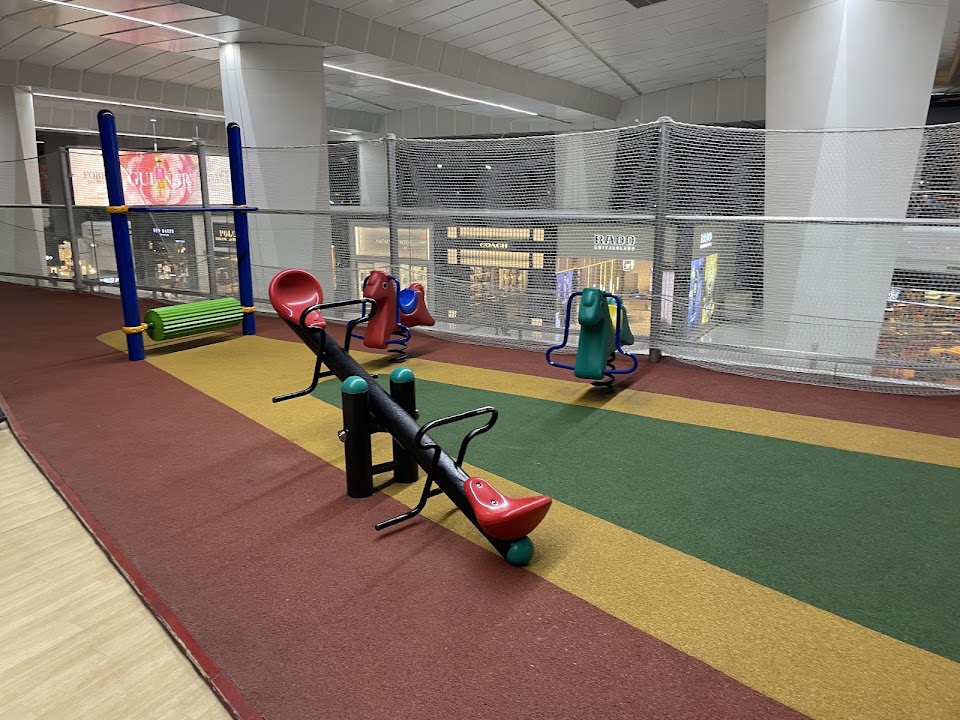
Terminal 3 features a dedicated children’s play area located in the International Departures section, just past the duty-free maze. It isn’t a massive theme park, but it is exactly what a toddler needs:
- Soft, padded flooring to prevent bumped heads.
- Small climbing structures and slides.
- Interactive wall panels and sensory toys.
- Ample seating around the perimeter so parents can sip a coffee while supervising.
The area is generally meant for kids under the age of 8. It’s completely free to use and operates 24/7.
Creating Your Own “Play Zones”
If you’re flying out of T1 or T2, or simply can’t locate the official play zone, you have to get creative. Look for empty gates. Delhi Airport is so large that there are almost always gates not currently in use. The far ends of the concourses in T3 domestic, for instance, are often deserted. These make perfect impromptu spaces to let your toddler crawl, walk, or play with their toys on the carpet without bothering anyone.
Best Restaurants for Families in Each Terminal
A hungry toddler is an angry toddler. Fortunately, IGI Airport is packed with excellent dining options that cater beautifully to families. Indian hospitality shines here, and restaurant staff will often go out of their way to accommodate children, from heating up baby food to finding high chairs.
Terminal 3 (International & Domestic)
T3 has the best spread of restaurants. The main food court area on the mezzanine level (just past security) is vast and loud, but it offers something for everyone.
- Haldiram’s: A staple of Indian travel. This is a brilliant spot to introduce kids to mild, safe Indian snacks. They serve reliable, hygienic dosa (rice crepes) and mild idli (steamed rice cakes), which are incredibly toddler-friendly and easy to digest.
- Costa Coffee & Starbucks: Essential for exhausted parents. Both usually have plenty of space to park a stroller, and you can grab familiar pastries, muffins, and warm milk for the kids.
- Grid Bar & Encalm Lounges: If you want table service and a quieter atmosphere, consider paying for lounge access or visiting one of the sit-down restaurants. The noise level drops significantly, making it easier for kids to eat in peace.
Safe Eating Tips for Kids
When feeding young kids at the airport, stick to familiar or very safe options to avoid upset tummies mid-flight.
- Avoid raw salads and cut fruit: Stick to foods that are cooked piping hot.
- Request “No Spice”: Even seemingly innocuous dishes might have a kick of chili. Always explicitly ask for the food to be made completely non-spicy.
- Stock up on packaged snacks: There are several WHSmith and Relay convenience stores where you can buy familiar brands of crackers, biscuits, and juices.
Priority Boarding — Do You Get It in India?
Navigating airport bureaucracy with a child can be frustrating, but India actually has some fantastic, family-friendly policies built right into the system.
Security Checkpoints
This is the single best perk for families traveling in India. At almost every airport in the country, including Delhi, there are dedicated security queues for women and families. Because Indian airport security requires physical pat-downs in closed booths for women, the lines are separated by gender. However, mothers traveling with young children (and often the fathers traveling with them) are routinely ushered into priority lanes or dedicated family queues.
If you don’t see a family lane, politely approach the security officer at the front. More often than not, they’ll bypass the massive general queue and push your family through immediately.
Airline Boarding Policies
When it comes to boarding the actual aircraft, policies vary by airline, but the culture is very accommodating.
- Air India & Vistara: These full-service carriers almost always announce priority boarding for families with infants and young children. Be ready at the gate to take advantage of this!
- IndiGo & SpiceJet: Budget carriers can be a bit more chaotic. They don’t always do a clear pre-boarding call for families. However, if you stand near the front and gently explain to the gate agent that you need a few extra minutes to set up your infant, they’ll usually let you slip through first.
Pro Tip: If you have a highly active toddler, you might actually want to board last. Send one parent on board early with all the bags and the travel car seat to set up the row. The other parent can keep the toddler running around the terminal until the final boarding call, minimizing the amount of time they’re confined to a metal tube!
Sleeping Through a Layover with Kids
If you’re using Delhi as a transit hub between Europe/North America and other parts of Asia, you might be facing a dreaded 6 to 8-hour layover. Trying to get a child to sleep on metal airport chairs is a nightmare. You have much better options.
The Transit Hotel
If your budget allows and your layover is longer than 5 hours, book a room at the Holiday Inn Express New Delhi International Airport T3. It’s located inside the terminal. You don’t need to clear immigration or go outside. You can simply walk to the hotel, check into a clean, quiet, heavily soundproofed room, and let your whole family get some proper horizontal sleep in a real bed. They offer both domestic and international wings.
Encalm Lounges
Delhi Airport recently revamped its lounge network under the “Encalm” brand. If a hotel is out of budget, lounge access is the next best thing. You can purchase access at the door or use Priority Pass. The lounges feature much more comfortable, padded seating, unlimited food and drinks, and most importantly, clean and spacious restroom facilities. Some of the premium lounges even offer sleeping pods or secluded quiet zones.
While lounges can get busy during the late-night international departure rush (10 PM to 2 AM), they still offer a much calmer environment for a child to nap than the main concourse.
Quiet Zones
If you’re roughing it in the terminal, hunt for the designated quiet zones. T3 has several areas fitted with reclining lounge chairs. These are free to use, but they fill up fast. Have one parent scout ahead to secure a couple of chairs while the other handles the kids and the bags.
With a little bit of planning, navigating Delhi Airport with your kids can transform from a source of anxiety into just another manageable step in your family adventure. Take your time, ask for help when you need it, and remember that Indian culture genuinely adores children—you’ll find smiling faces and helping hands at almost every corner.
Related Reading
- Ready to explore the city? Check out our complete guide on Getting Around Delhi with Kids to master auto-rickshaws and taxis.
- If you plan to use public transport, don’t miss our essential tips for navigating the Delhi Metro with Kids.
- Planning a longer stay? Dive into our Delhi City Hub for itineraries, neighborhood guides, and family-friendly hotel reviews.
Written by TinyTravelerTips Team
Our team of pediatric health reviewers and travel-testing parents verify every stroller tip, safety zone, and hotel hack so you can travel stress-free.
Related Guides
Put these tips to the test!
We've applied these exact strategies to build 100% stroller-friendly, meltdown-proof itineraries for top cities worldwide.
Browse Itineraries